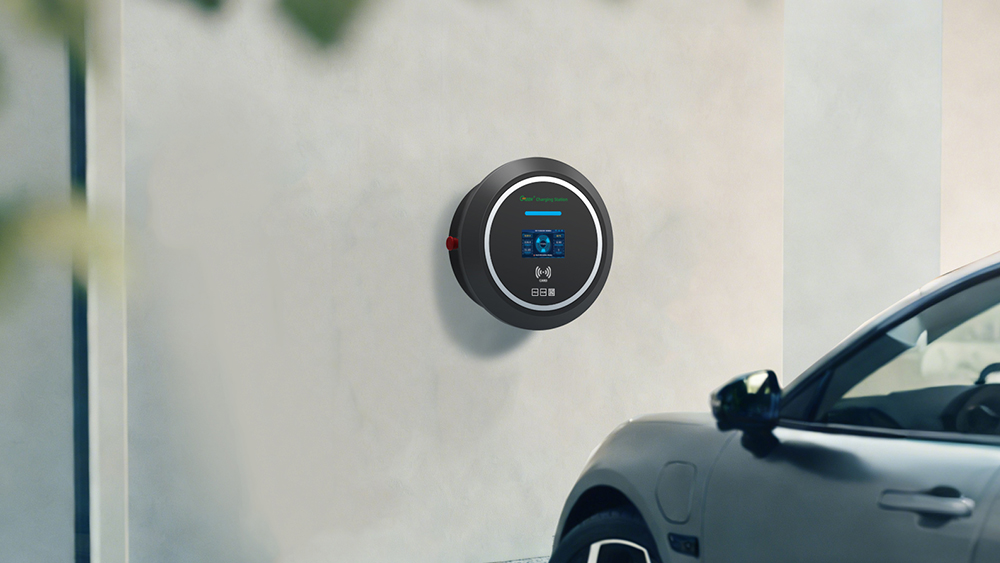


Charging Principle of Charging Piles
2026-03-12

The core function of a charging pile is to convert and regulate electrical energy from the power grid, delivering it to the power battery of an electric vehicle in a safe and suitable manner. Essentially, it achieves the controllable conversion of "grid electrical energy → battery-usable electrical energy", which is dominated by the Battery Management System (BMS) throughout the process to ensure charging safety and efficiency. According to different charging methods, it is divided into AC charging piles (slow charging) and DC charging piles (fast charging), which have obvious differences in principles and processes. The details are as follows:
I. AC Charging Pile (Slow Charging, usually 7kW and below)
Core Principle: The pile only distributes power, and rectification conversion is completed in the vehicle
The AC charging pile itself does not have the function of converting AC power to DC power. It only distributes, protects, and communicates with the AC power output from the grid. The real "rectification conversion" is completed by the On-Board Charger (OBC) built into the electric vehicle.
Energy transmission path: Power grid (220V household AC power / 380V industrial AC power) → AC charging pile (power distribution, protection, communication) → On-Board Charger (OBC, completing AC-DC rectification) → High-voltage DC power → Electric vehicle power battery.
Detailed Working Process
-
Connection Confirmation: After inserting the charging gun into the vehicle's charging port, the pile performs a "handshake" with the vehicle through CC/CP signals to confirm that the charging gun is firmly connected and in good contact, avoiding safety hazards caused by poor contact.
-
Identity Authentication: Complete authentication by swiping a card, scanning a QR code, or operating an APP. After confirming user permissions, the charging pile closes the internal contactor and delivers AC power to the vehicle.
-
Rectification and Charging: The On-Board Charger (OBC) converts the input AC power into DC power acceptable to the power battery. At the same time, the Battery Management System (BMS) real-time monitors the battery status and controls the charging process to proceed in the "constant current → constant voltage" mode.
-
Stop Charging: When the battery is fully charged or the user actively stops charging, the BMS sends a stop signal. The charging pile immediately cuts off the power supply, and the user can pull out the charging gun after the voltage drops to a safe range.
II. DC Charging Pile (Fast Charging, usually 30–120kW)
Core Principle: The pile completes rectification and voltage regulation, directly outputting DC energy
The DC charging pile has a built-in rectifier module (AC-DC) and voltage regulation module (DC-DC), which can directly convert the three-phase 380V AC power from the grid into high-voltage DC power, and adjust the voltage and current according to the battery's needs. It supplies power directly to the power battery without the participation of the on-board charger, realizing fast charging.
Energy transmission path: Power grid (three-phase 380V AC power) → DC charging pile (AC-DC rectification → DC-DC voltage regulation) → Adjustable high-voltage DC power → Electric vehicle power battery.
Detailed Working Process
-
Safety Inspection and Handshake: After inserting the charging gun, the charging pile first performs insulation testing and leakage current testing on the vehicle, and communicates with the BMS at the same time to obtain parameters such as the current battery voltage, temperature, remaining power (SOC), and maximum allowable charging current and voltage.
-
Power Conversion: The rectifier module in the pile converts the three-phase AC power into a high-voltage DC bus (usually 500–800V). At the same time, the PFC (Power Factor Correction) module optimizes the power quality and reduces grid loss.
-
Dynamic Regulation of Charging: The DC-DC voltage regulation module outputs the appropriate voltage and current for the battery according to the BMS command. In the early stage of charging, the "constant current fast charging" mode is adopted (power from 0→about 80%) to quickly supplement power with maximum current; when approaching full charge, it switches to the "constant voltage floating charge" mode, where the voltage remains stable and the current gradually decreases to avoid battery damage caused by overcharging.
-
Safety Monitoring and Shutdown: During the entire charging process, the charging pile real-time monitors the insulation status, battery temperature, and charging current/voltage. If abnormal conditions such as overvoltage, overcurrent, overtemperature, or leakage occur, it immediately cuts off the power supply and triggers the protection mechanism to ensure the safety of the equipment and the vehicle.
III. Core Differences Between AC and DC Charging Piles (Table Comparison)
|
Comparison Items
|
AC Charging Pile (Slow Charging)
|
DC Charging Pile (Fast Charging)
|
|
Charging Power
|
3.5–7kW (household/small public scenarios)
|
30–120kW (large public charging stations, some super charging piles can reach more than 200kW)
|
|
Rectification Conversion Location
|
On-Board Charger (OBC) built into the electric vehicle
|
Inside the DC charging pile (AC-DC rectification + DC-DC voltage regulation)
|
|
Charging Time
|
6–10 hours to fully charge (suitable for long-time charging at night)
|
0.5–1 hour to charge to 80% power (suitable for emergency fast charging)
|
|
Installation Cost and Conditions
|
Low cost, only 220V household AC power is needed, suitable for home and community installation
|
High cost, needs to be connected to 380V three-phase industrial power, only suitable for public charging station deployment
|
IV. Charging Control Core and Safety Guarantee
1. Control Core: Dominated by BMS (Battery Management System)
The entire charging process is dominated by the vehicle's BMS. The BMS real-time collects parameters such as battery voltage, current, temperature, and SOC, sends commands to the charging pile, and dynamically adjusts the charging voltage and current to ensure that the charging process matches the battery status and avoids overcharging and undercharging.
2. Charging Mode: Two-Stage Charging (Protecting Battery Life)
-
Constant Current Stage: When the battery power is from 0→about 80%, large-current fast charging is adopted to quickly supplement power and improve charging efficiency;
-
Constant Voltage Stage: When the battery power is from 80%→100%, constant voltage floating charge is adopted, where the voltage remains stable and the current gradually decreases, reducing battery polarization, protecting battery cells, and extending battery service life.
3. Multiple Safety Protection Mechanisms
Both the charging pile and the vehicle are equipped with multiple safety protection functions to eliminate safety hazards:
-
Electrical Protection: Overvoltage, overcurrent, undervoltage, and short-circuit protection to prevent electrical faults from damaging equipment and batteries;
-
Temperature Protection: Monitor the temperature of the battery and charging pile, and automatically stop charging when it is too high or too low;
-
Insulation and Leakage Protection: Real-time detect the insulation status of the charging circuit, and immediately cut off the power supply if leakage occurs;
-
Emergency Protection: Equipped with an emergency stop button to manually cut off the power supply in case of emergencies.
V. Popular Summary
AC Slow Charging: It is equivalent to connecting a "household socket + on-board charger" to the vehicle. The charging speed is slow, but the installation is convenient and the cost is low, which is suitable for long-time static charging (such as at night);
DC Fast Charging: It is equivalent to installing a "high-power charger" directly in the charging pile, skipping the on-board charger and directly delivering large current to the battery. The charging speed is fast, which is suitable for outdoor emergency charging.
Advantages of Pure Electric Vehicles Compared with Fuel-powered Vehicles
Home Charging Guide